
The Miss Log.
Every practice question you miss goes on one line and points to its page. In a week you can see your weak areas instead of guessing them.
Study notes for the NREMT Paramedic exam

136 Paramedic topics, one page each. Every page ends with what comes first, why it goes ahead of the other right answers, and the answer that only looks first.
Every topic, the same three lines:
We're no longer taking new orders.
7-day money-back guarantee. If it isn't helping, email us and we refund you in full. No forms.
One payment, no subscription · Instant PDF download
One real page, Anaphylaxis
Every topic gets the same lines in the same place. By the second page you stop hunting and start reading for the order.

And at the bottom, the answer that tempts you, with its verdict:
The decision comes last on purpose. What comes first, without the why, is one more thing to memorize. After the why, it's the only answer that makes sense.
If you did well in school

You did well in class. You ran the practice questions until the scores looked fine. Then the exam put four answers in front of you, all of them things a medic would do, and asked which one comes first.
We read 1,217 posts from people who had failed the NREMT. One in three said they had done well in school. More than one in three were already using a question app. Only 6 in 100 blamed cardiology. They blamed the answers: four of them right, and the wrong one picked.
That isn't a knowledge gap. It's an order gap. The textbook, the app and the flashcards all hand you the same thing: a list. Signs, drugs, acronyms, a thousand answers on a phone. A list has no order. A batting order does: who's up first, who's next, and who waits.
And it isn't you. A student two months from the end of class wrote: “Maybe I'm not studying efficiently, maybe im just dumb who knows.” Nobody had handed that student the order. Every page of these notes is built on it.
The part nobody teaches
354 of those 1,217 posts were about the number of questions the test stopped on. So before a single topic, the notes open with the exam itself, from the National Registry's own documents:

These are the actual pages, not a mockup.
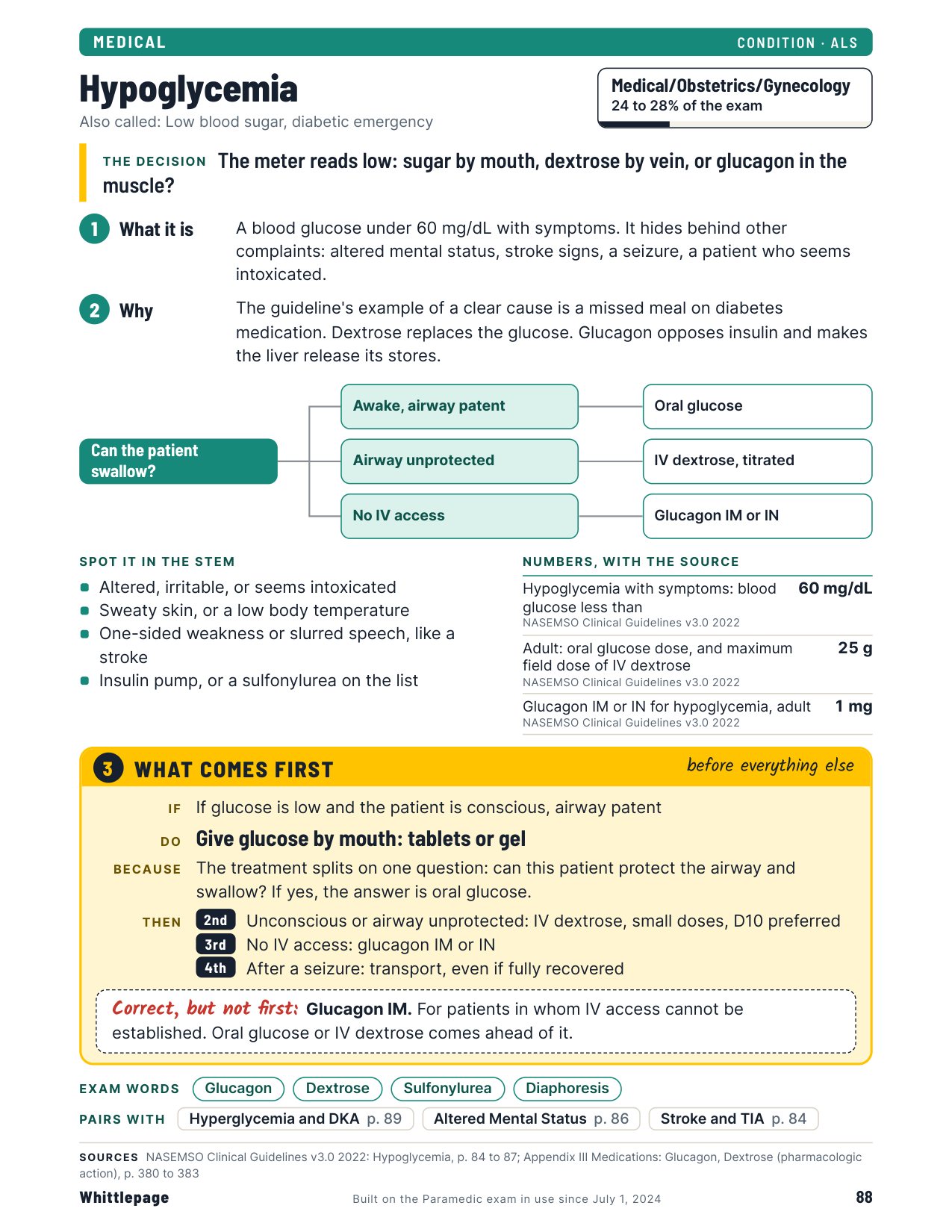
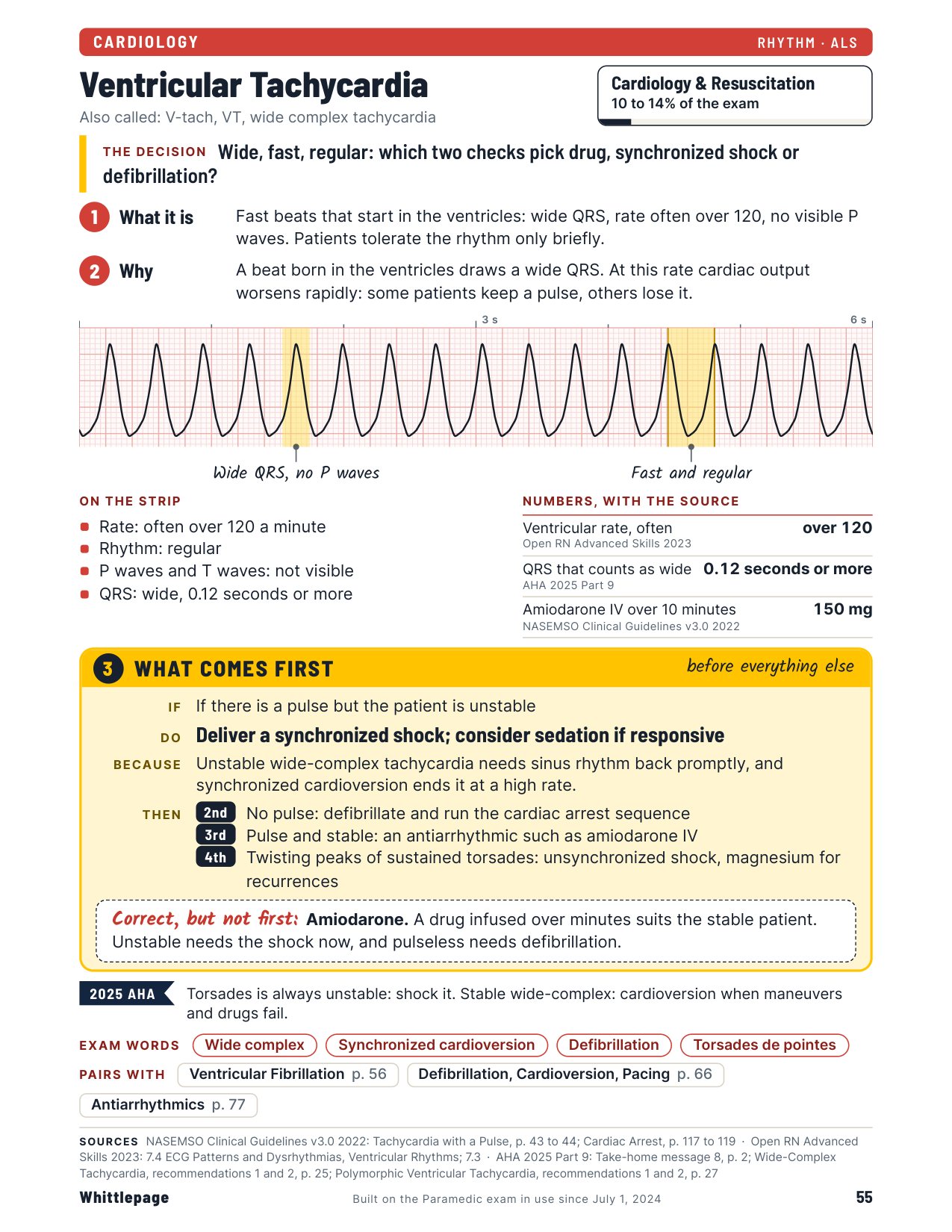
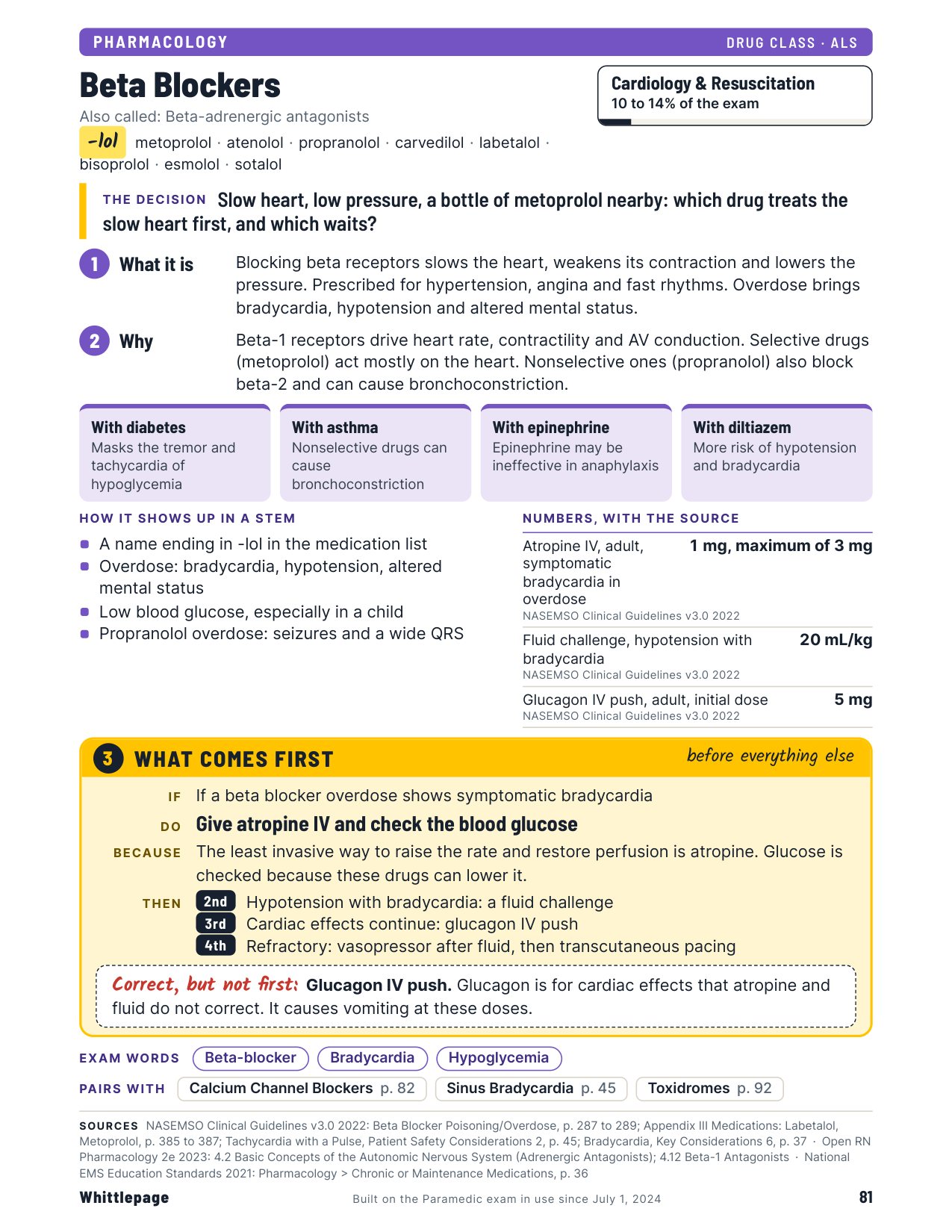
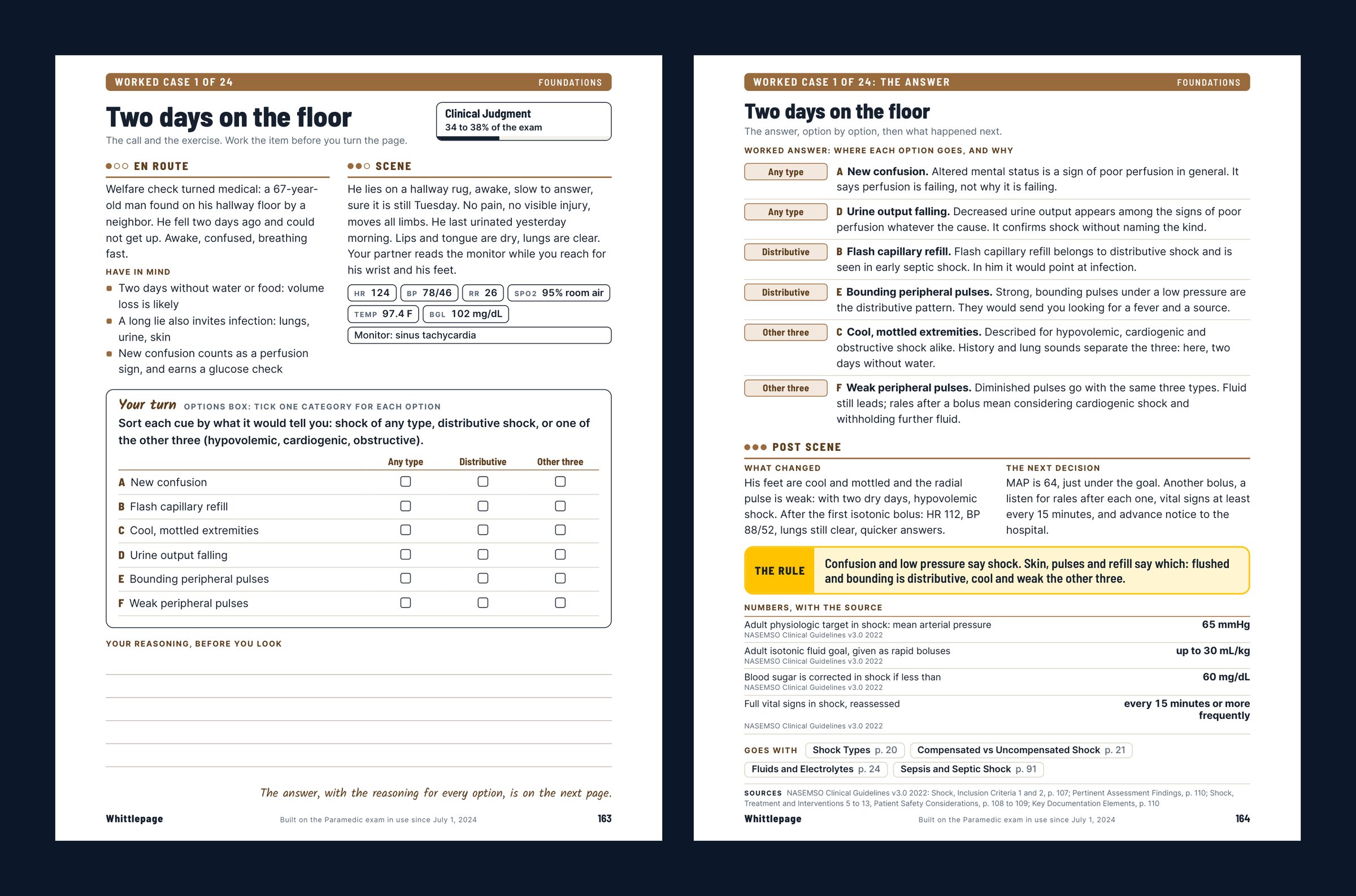
Swipe for more · tap a page to open it full sizeScroll sideways for more · click a page to open it full size
What's inside
Plus 24 worked calls in three phases (en route, on scene, after), with the reasoning for every option, and a glossary of the words that questions use.
Every practice question you miss goes on one line and points to its page. In a week you can see your weak areas instead of guessing them.

Sat it once already? At $175 an attempt and 15 days of waiting, the next one has to count. The score report gives you one number and no list of weak spots. The plan starts from that number and from your Miss Log, and works the days before your next attempt, weakest subject first.

One card per topic, built from the same pages: the decision on the front, what comes first and why on the back. Print the set and cut it, or swipe through it on your phone.

A print edition that goes easy on ink, a tablet edition with a clickable index you can write on, and a phone edition with one column and large text.
Read The Exam, Decoded once. It takes about half an hour.
Open the chapter, one topic per page, and read down to what comes first.
Missed a practice question? Log it, read the page, move on.
For a son, a daughter, a partner or a grandchild with the exam on the calendar: the library link comes to your email and doesn't expire. Forward it to them, or print the pages and hand them over. The 7-day guarantee covers you either way.


Total value$144
Today$49
We're no longer taking new orders.
7-day money-back guarantee. If it isn't helping, email us and we refund you in full. No forms.
One payment. No subscription, nothing to cancel. Secure checkout by Stripe. Refund policy.
Wrong answers are the first thing students complain about in paid study material. So every page here carries its sources at the bottom, and every number on the page (a dose, a rate, a threshold) is listed with the document and the section it was taken from.
The core sources are the ones the exam is built on: the National Registry test plan, the National EMS Education Standards, the National EMS Scope of Practice Model, the national model clinical guidelines, and the 2025 AHA guidelines for CPR and emergency cardiovascular care. Open medical texts fill in the physiology and the rhythm recognition. 54 sources in all, listed at the back.
Read The Exam, Decoded and three topics you're weak on. If it isn't helping, email [email protected] within 7 days of your purchase and we'll refund you in full. No forms.
Questions
The Paramedic exam. This edition is built on the NREMT Paramedic exam in use since July 1, 2024. The EMT exam has different domains and a different scope, and it gets its own edition.
Keep the app. It tells you what you missed. These notes are the page you go back to, and the Miss Log ties the two together.
For the sections where you're weak, yes. These notes are the second read: the whole course on one topic per page, for the weeks before the exam. They don't replace your program.
There are, and some are good. What's hard to get for free is knowing where each line comes from, a page built on the exam in use today, and what comes first spelled out for every topic.
Whittlepage is an independent publisher. We are not a medic school and we are not the National Registry. We built these notes from the documents the exam is built on, and every page shows its sources so you can check any line.
It's built on the Paramedic exam in use since July 1, 2024, with its six domains. Pages touched by the 2025 AHA guidelines are marked.
No. It isn't a question bank or a simulator. You get worked calls with the reasoning for every option, and the newer question types explained with our own examples.
No. One payment, no trial, nothing to cancel.
It's a PDF, nothing ships. You get a print edition for US Letter paper, a tablet edition with a clickable index, and a phone edition. Download links arrive on the page after payment and by email.
Email us within 7 days and we refund you in full. Full policy on the refund page.
No. Whittlepage is independently developed and is not affiliated with or endorsed by the National Registry of Emergency Medical Technicians or the American Heart Association.
No. It's study material for a national exam. It follows the national standard the exam tests, and it doesn't replace your program, your local protocols or your medical director.
Spend the days you have on what comes first.
We're no longer taking new orders.
7-day money-back guarantee. If it isn't helping, email us and we refund you in full. No forms.